![3[1]](https://datagraphic.co.uk/wp-content/uploads/2025/08/31-690x400.png)
Optimise communications for local authorities: Making a Case
Read More ›


Updated: Dec 2025
Communicating with customers used to be simple: face-to-face, by phone, or via email. Now, people expect you to communicate with them through their preferred channels, including social media, instant messaging, and web portals. This article will explore the importance of multichannel communication and the benefits of utilising a comprehensive multichannel communication system.
We’re all well aware that we now live and operate in a predominantly digital world and have been for some time. For start-ups and small businesses, the ability to communicate in this digital world has appeared seamless. But for larger organisations with more traditional models and legacy systems, the transition has been more challenging.
Yet, the importance of engaging and motivating customers is essential for every organisation. In today’s digital world and competitive landscape, you need to communicate through multiple channels, including both digital and physical. Providing a customer experience that spans multiple channels is vital.
Consider your customer experience across all print, web, email, text, and other channels you use. Will you find success by forcing customers to follow a single channel? Or is the better solution to deliver a consistent experience via the channel of their choice?
Whilst it’s necessary to adapt to digital channels of delivery, it’s worth considering your customer profile. What channels do they use and need? If print remains part of the mix today, it will likely continue to do so tomorrow, albeit in lower numbers. So don’t discount this channel. Every channel is important.
If delivering multichannel communications is challenging, consider partnering with a specialist. A document automation partner can deliver communications via your customers’ channels of choice, without requiring system changes. It simply needs a partner with automation solutions to complement its existing efforts.
In this article, we’ll cover why multichannel communication is so important, provide an example of how a multichannel communication system works, and discuss the advantages of using such a system.
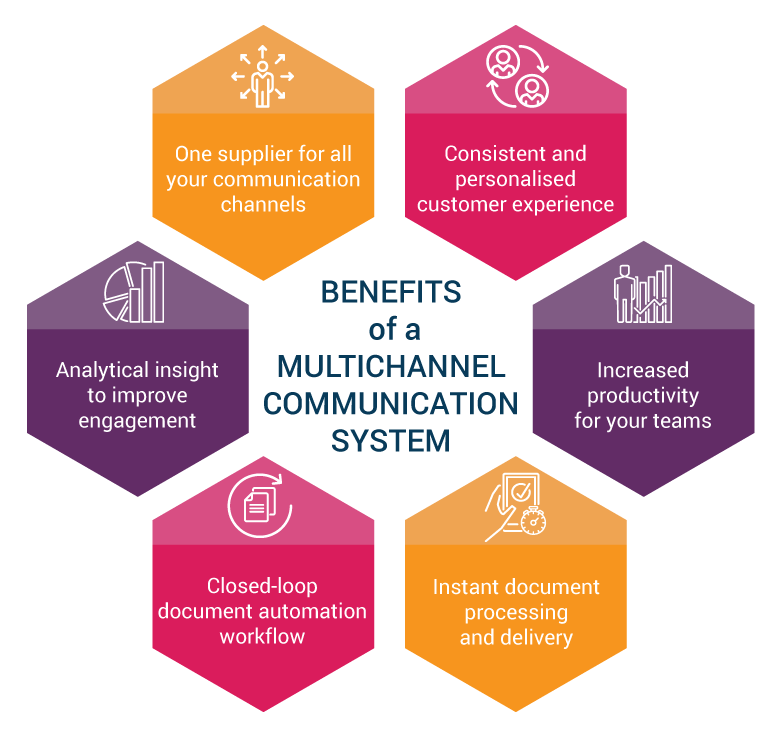
So before we start, let’s quickly highlight the six advantages of using a multichannel communication system (so you know why it’s worth reading on!):
A multichannel communication definition is communicating and engaging with customers across multiple channels such as print, text, email, web portals, social media and mobile apps.
It means you need to present the same information, whether in digital or physical form.
Demand for multichannel communications is booming as businesses shift away from informing customers that time-critical information will be sent to designing customer journeys that prioritise the customer’s preferred channel(s).
Today, providing an excellent customer experience is vital and is often considered the key differentiator between competitors, ahead of product and price. In our digital world, customers’ expectations are becoming increasingly demanding. They want a social, mobile and ‘always-on’ experience from the organisations they interact with.
The demand for digital is consistently increasing year on year, and the adoption of newer methods of communication is outperforming more established forms. This is important to consider when reviewing your channel offering and customer base.
The Ofcom Online Nation report found that in April 2020, UK adults spent an average of 4 hours and 2 minutes online every day. They also found that more people were sending daily messages using online messaging platforms (52%), such as WhatsApp and Facebook Messenger, than using SMS (41%) or email (26%).
But there is still a proportion of people who don’t have access to the internet or just prefer to receive communications in print. That’s why our motto at Datagraphic is to think digital-first, not digitally exclusive.
In 2020, UK adults spent on average 4 hours and 2 minutes online every day
With the pressure to present customer-facing documents digitally, some teams are opting to provide online access only and eliminate printed documents altogether. Each organisation is different, so it could be the most effective and engaging way to deliver information to its customers. For others, a large percentage will prefer to receive a printed copy. At Datagraphic, we encourage our clients to offer a multichannel delivery and cater to the individual customer’s channel of choice.
It’s essential that, as we focus our efforts on becoming more digital, we don’t exclude those who are unable to access information online or simply prefer to have paper copies of the important documents you send. You’ll see much better engagement with your communications if you give customers a choice.
So don’t stop thinking digital-first; just remember to consider those who might want or need print.
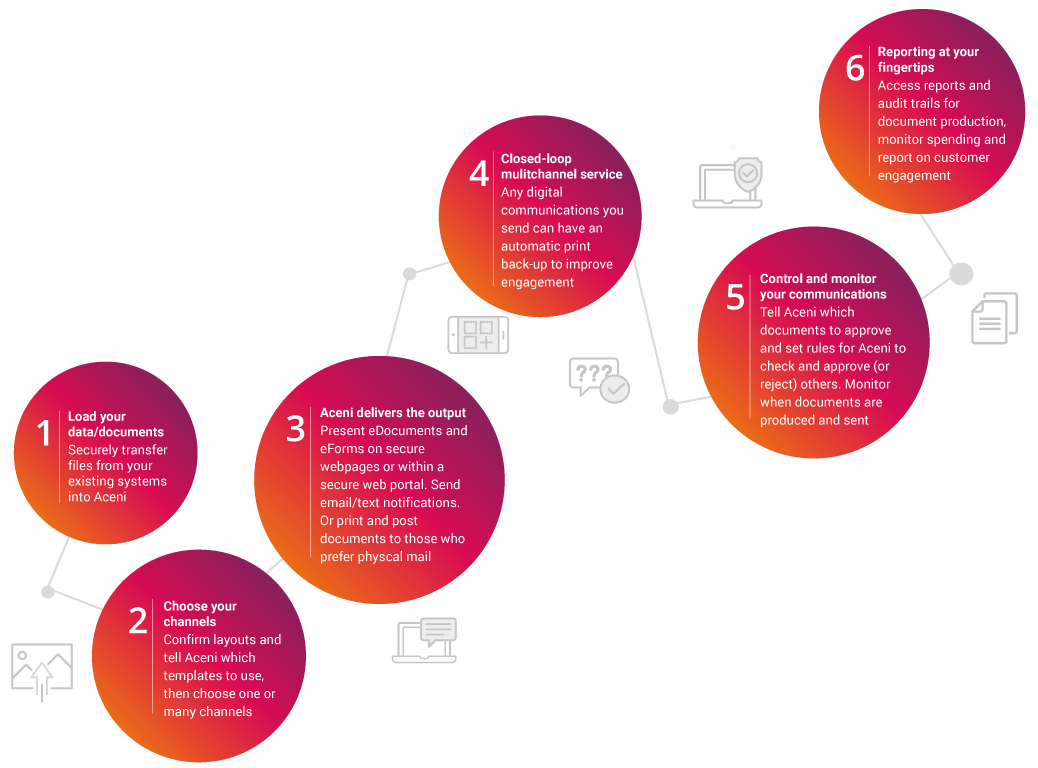
There are many multichannel communication platforms available, which typically involve transferring or uploading data to be converted into interactive documents delivered across the channels you select.
To give you a real example, here’s a quick overview of how Datagraphic’s Aceni, a multichannel communication system, works:
By utilising a multichannel communication system to automate manual tasks, you can communicate with your customers in the most effective and efficient manner. You’ll save time and staff resources, as your team will be able to focus on more high-value work.
You’ll need a solution that can grow and scale with you as your customer base expands or where volumes fluctuate due to seasonal demands. You’ll also need a solution that can evolve alongside new technology and easily switch between communication channels, allowing you to deliver a seamless multichannel experience.
We highly recommend working with trusted third-party multichannel communication experts who can adapt and change as your business grows. Partnering with specialists from the outset will bring knowledge and experience across your project’s development, implementation, and growth. It eliminates the need to work with or manage multiple suppliers, allowing you and your employees to focus on business and realise the benefits that multichannel communication can bring.
There are many advantages to a communication system for communicating with your customers, employees, and suppliers, including a competitive advantage and more efficient processes. However, we’ve highlighted our top six benefits, which we believe will provide the most value.
Effective multichannel communication software can consolidate data across various back-office systems and deliver consistent, tailored customer-facing documents across all your channels. Documents can contain individual or multiple data fields and contextual data: all personalised. Automation rules can also make sure extra documents and information are only added where relevant. Improve your customer experience and deliver relevant, timely and engaging communications on the channel of their choice.
The documents you send to customers are core to how your organisation operates, but are often not core responsibilities of your team, rather a business need. Multichannel communication systems automate fragmented, manual and repetitive processes, so your documents are produced and delivered more quickly and accurately. Now your teams have more time to focus on new projects, analyse customer data to provide insight into other business areas, all without having to worry about completing the repetitive, administrative task of document production and distribution.

Turn your data into customer-facing documents, present them securely online in minutes, or print and mail them the same day.
Tasks, such as document production and distribution, that previously took your teams hours to complete can now take seconds or minutes to complete using automation solutions within a multichannel communication system.

A full-service multichannel communication system should be able to offer a closed-loop document automation workflow. This is where you can automatically send follow-up communications and notifications via alternative channels to make sure your customers read the important documents you send.
For example, if you send a document containing important information that requires action to a customer online via a secure, personalised web page, and after three days you notice the document remains unread, a text or letter can be automatically sent to the person containing the same information. This means you can engage with your customers more effectively and efficiently.
Monitor costs, analyse engagement and improve future communications to increase customer engagement.
The multichannel communication system you use should follow highly auditable processes. For example, in-built controls and reporting options cover all the key information you need to make informed decisions. If you need to track a letter in response to a customer query, this should be available from data upload to mail-out. Or if you want to view online engagement to report on deliverability and open rates. You should also be able to report on spending and document delivery rates to share with management teams for budget reports.
Whether you’re printing and mailing information, sending text and email notifications or hosting documents securely online, having a multichannel communication system makes it much easier to manage.
There are third-party solutions available that can provide the secure end-to-end production and distribution of documents through all communication channels. This makes communicating with your customers straightforward; however, they prefer to be reached, as a single supplier can manage all of your communication channels. It also reduces the risk of a data breach, as you are only transferring data to one supplier rather than sending data to multiple suppliers for different channel outputs.
Aceni by Datagraphic is a multichannel communication platform that provides secure document automation for web, print, email and text communications.
A powerful productivity tool, it delivers scalable, end-to-end multichannel communications. All from one secure, controlled, GDPR compliant UK production and technology centre. It helps organisations and teams deliver digital transformation and document automation quickly, improve customer engagement and drive more positive outcomes whilst future-proofing processes to respond to changing needs and communication preferences.
Aceni is a unique multichannel communication system that automates, controls, and delivers your outbound customer documents, enabling you to achieve digital transformation in weeks. But what makes Aceni so special?
Get in touch for more information on Aceni and how a multichannel communications system can help you communicate with your customers more effectively.